Stamped Concrete
Stamped Concrete Patios & Driveways in Tacoma & South Sound
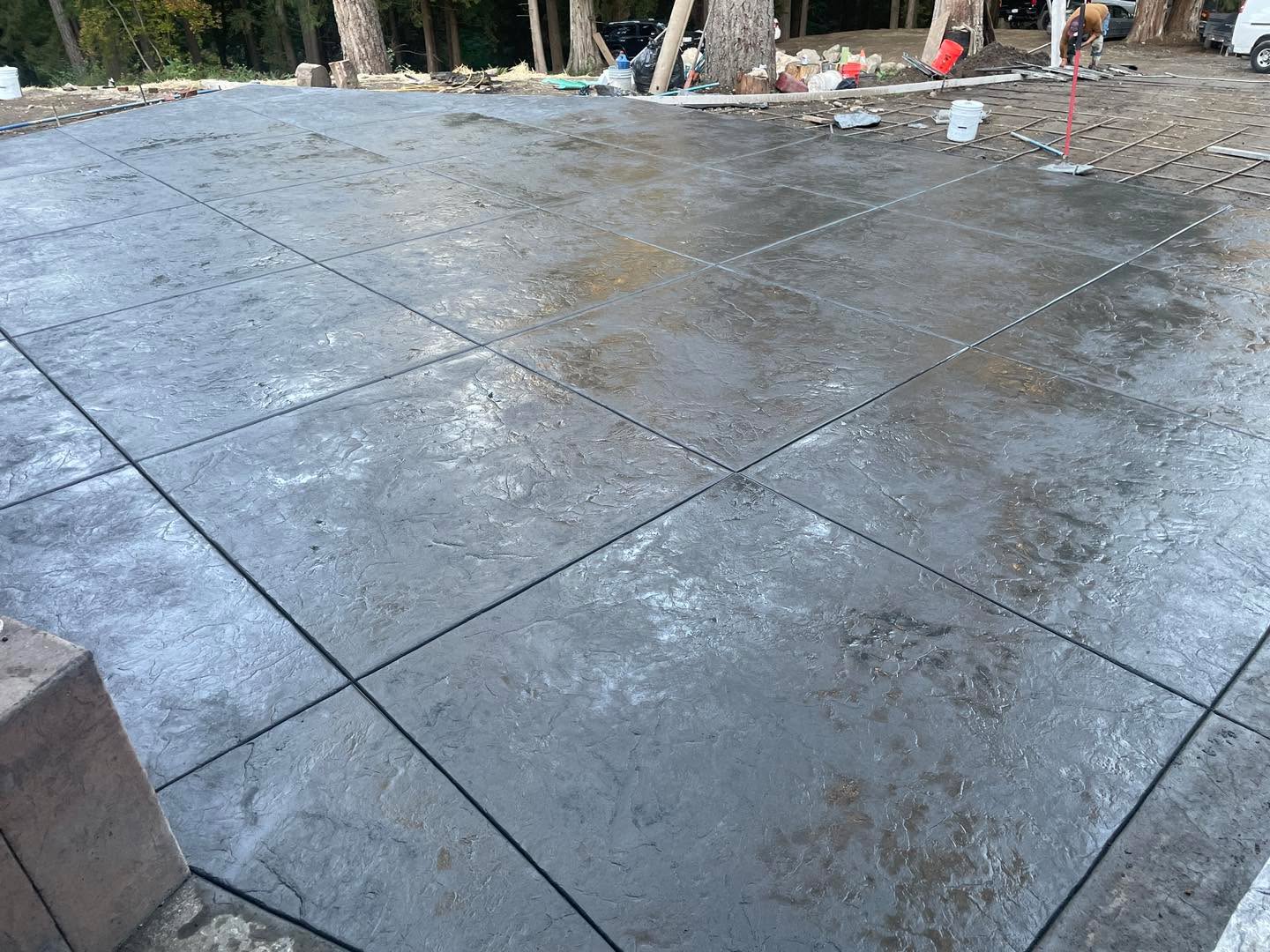
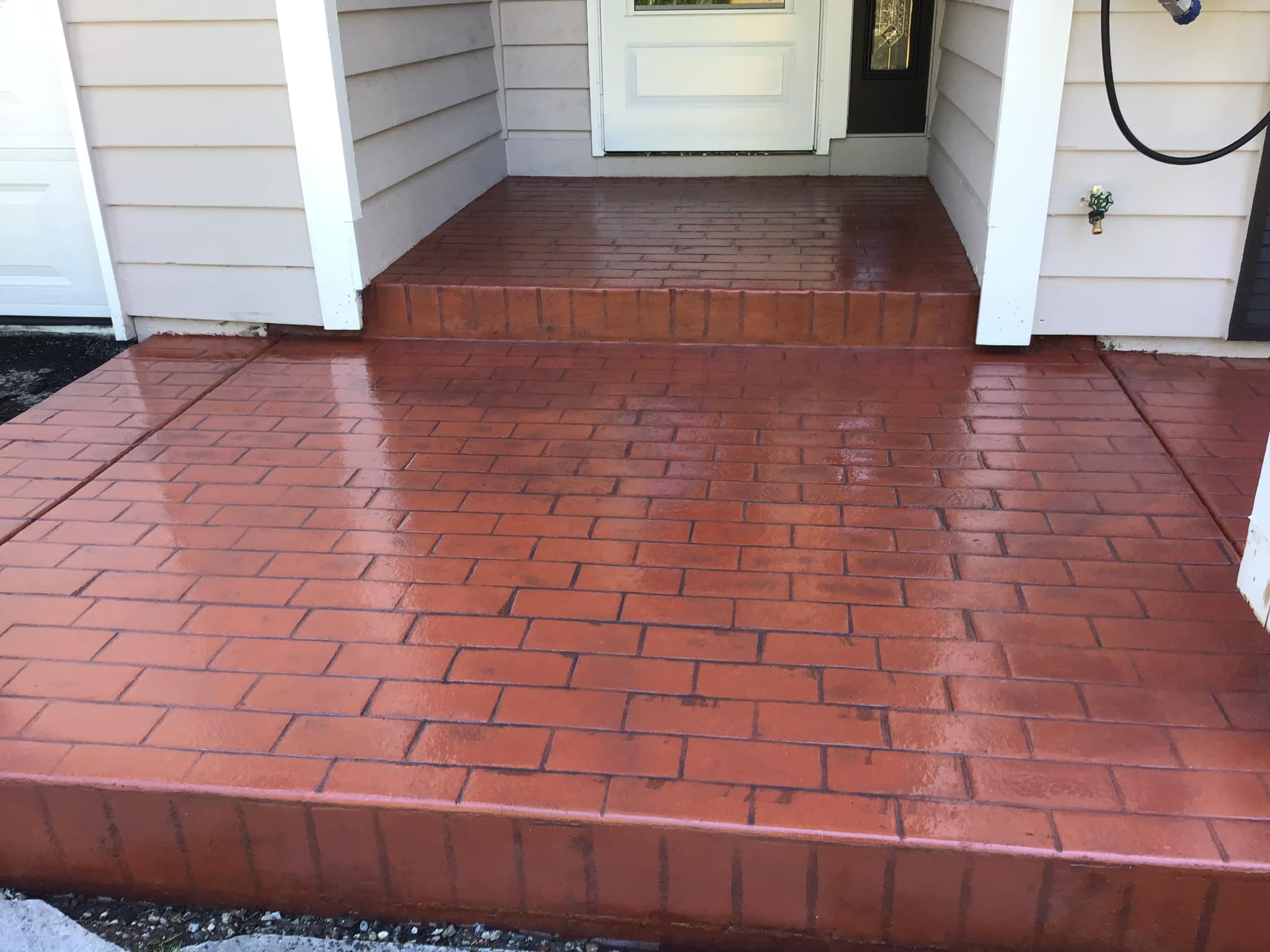
Our team pours stamped concrete that looks like natural stone or brick without the price tag. The stamp pattern gets pressed into fresh concrete before it sets, sealed with color hardener, then finished with a release agent for depth. Heavy Stone, Chiseled Slate, Majestic Ashlar, brick—pick the pattern and our crew handles the rest.
How stamped concrete works
The process from form to finish.
Grade, compact, and form the slab
Same prep as any flatwork: clear the area, set compacted gravel base, build the forms with proper slope for drainage.
Pour and apply color hardener
Air-entrained concrete goes down, then color hardener is broadcast across the surface while it is still wet. This is what gives stamped concrete its base color.
Stamp the pattern before it sets
Texture mats get pressed into the surface while the concrete is still workable. Timing matters here. Too early and the stamps sink; too late and the pattern will not take.
Release, wash, and seal
A release agent creates the shadow lines between stamps. After curing, the surface gets pressure-washed and sealed with a high-gloss or matte sealer for UV and weather protection.
Pattern options
Patterns our crew stamps regularly.
- Heavy Stone Texture: large, irregular stone shapes that look like natural flagstone. Popular for patios and pool decks.
- Chiseled Slate: tight, linear pattern with a hand-cut stone look. Works well on walkways and smaller areas.
- Majestic Ashlar: ashlar stone with varied rectangular shapes. Classic look for driveways and entryways.
- Brick patterns: running bond or herringbone brick stamps for a traditional feel on walkways and borders.
- Stamped borders on broom-finish or exposed aggregate slabs: adds a decorative edge without stamping the entire surface.
What to expect
A few things worth knowing before you commit to stamped concrete.
- Stamped concrete costs more than broom finish but less than natural stone or pavers. The stamp pattern, color hardener, and sealer add to the material cost.
- Resealing every 2-3 years keeps the color sharp and protects against PNW rain and freeze-thaw cycles.
- Cracks can still happen. Control joints are cut into the slab just like any concrete pour. Stamps do not prevent cracking, but proper jointing controls where cracks form.
- Color will fade slightly over the years without resealing. A fresh coat of sealer brings it back.
- Stamped concrete can be slippery when wet. A non-slip additive mixed into the final sealer coat gives it grip without changing the look.
Common questions
Stamped Concrete FAQ
How long does stamped concrete last?
With proper base prep and resealing every few years, stamped concrete lasts 20-25 years in PNW conditions. The concrete itself is the same 4,000 PSI air-entrained mix our team uses on every slab.
Can you stamp an existing concrete slab?
Not the same way. Stamping has to happen during the pour while the concrete is still wet. For existing slabs, a stamp overlay (a thin layer of stampable material applied on top) is sometimes possible, but it depends on the condition of the existing surface.
What is the cost difference between stamped and regular concrete?
Stamped concrete typically runs 30-50% more than standard broom finish, depending on pattern complexity and area size. It is still significantly cheaper than natural stone or pavers for the same square footage.
Does stamped concrete crack?
All concrete can crack. Control joints are cut into stamped slabs just like any pour. The stamp pattern actually hides minor cracking better than plain concrete because of the textured surface.
Nearby service areas
Stamped concrete work across Tacoma and South Sound.
Ready for stamped concrete?